
For a generation of listeners, a few notes are all it takes.
That warm, unmistakable flugelhorn sound enters over an easy electric groove, the melody rises, and suddenly it is 1978 again. Chuck Mangione’s “Feels So Good” became one of the most recognizable instrumental recordings of its era — an extraordinary crossover success that carried the sound of a jazz horn into millions of homes, cars, radios and record collections.
It was a remarkable achievement. It may also have obscured just how much more there was to Chuck Mangione.
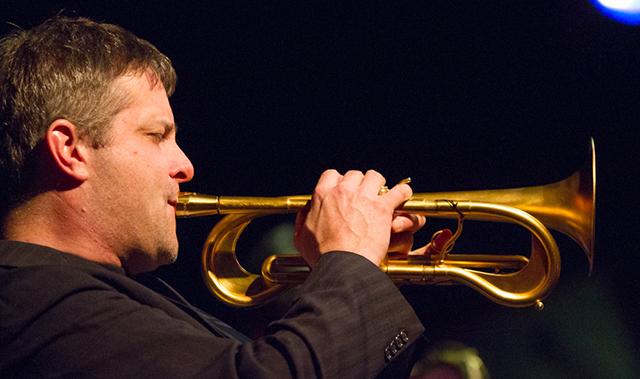
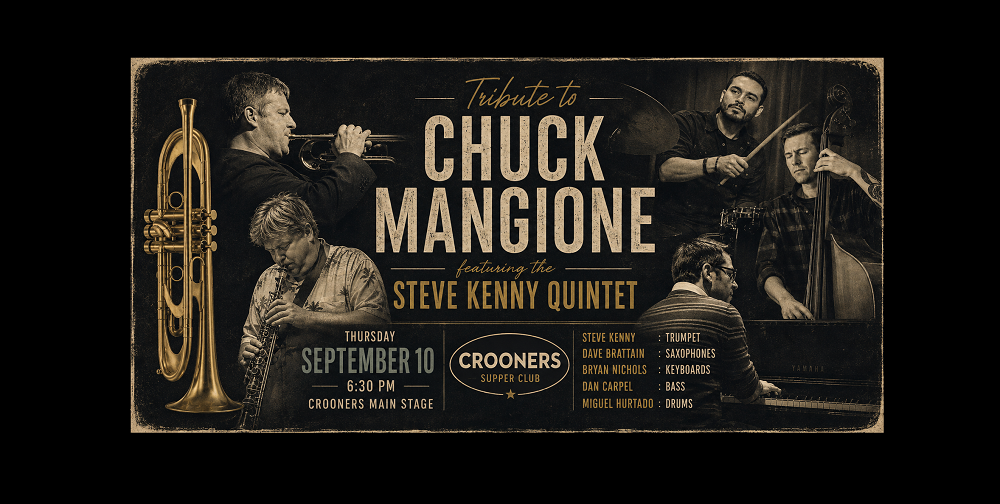
On Thursday, September 10, Twin Cities trumpeter Steve Kenny and his quintet will take the Main Stage at Crooners for a concert devoted to exploring that larger musical legacy. Rather than attempting to reproduce Mangione’s recordings, Kenny and an accomplished group of Minneapolis jazz improvisers intend to treat his compositions as jazz musicians have always treated worthwhile material: as starting points.
That approach raises an interesting question more than a year after Mangione’s death in July 2025: What happens when serious improvisers return to music that became so popular that much of the jazz world stopped listening closely to it?
The answer may be that we discover Chuck Mangione all over again, as this group is scheduled to perform many of the works discussed in this article.
Before the Crossover Success, There Was a Jazz Musician
Mangione’s eventual fame sometimes makes it easy to forget the depth of his jazz credentials.
Born in Rochester, New York, in 1940, Mangione grew up in a household where jazz musicians were not distant celebrities but frequent visitors. Chuck and his pianist brother, Gap Mangione, formed the Jazz Brothers and recorded several albums in the early 1960s. Chuck studied at Rochester’s Eastman School of Music and, importantly, spent time in one of jazz’s great proving grounds: Art Blakey’s Jazz Messengers.
That fact alone deserves attention.
The Jazz Messengers were not a finishing school for lightweight pop instrumentalists. Blakey’s bands were among the central institutions of hard bop, producing and nurturing generations of major improvisers and composers. Mangione emerged from that world with a genuine jazz vocabulary, a composer’s instincts and an increasingly identifiable sound of his own.
He would ultimately choose a path quite different from many of his contemporaries.
Mangione became interested in combining jazz improvisation with larger compositional structures, orchestration, electric instruments, memorable melodies and the rhythmic vocabulary of contemporary popular music. His work increasingly resisted the neat categories record stores and critics preferred to impose.
The 1970 concert and subsequent album Friends & Love, recorded with the Rochester Philharmonic Orchestra, offered an early indication of the scale of his ambitions. Here was music that could be melodic without being simplistic, orchestrated without abandoning improvisation, and accessible without completely surrendering its jazz identity.
That combination would become central to Mangione’s career.
A Flugelhorn Becomes a Popular Voice
Mangione also did something surprisingly difficult: he created an instantly identifiable instrumental voice.
His preference for flugelhorn helped define it. Compared with the brilliance and edge often associated with trumpet, Mangione’s sound could be round, vocal and unusually intimate. His melodies tended to breathe. Even when surrounded by electric keyboards, guitars, orchestration and strong rhythmic grooves, the horn often sounded remarkably human.
His 1970s recordings increasingly reached listeners far outside conventional jazz audiences.
“Bellavia,” from the album of the same name, earned Mangione a Grammy Award for Best Instrumental Composition. His music was heard in connection with the Olympic Games, including “Chase the Clouds Away” for the 1976 Summer Olympics and “Give It All You Got,” associated with the 1980 Winter Olympics in Lake Placid.
Then came Feels So Good.
Released in 1977, the album and its title composition became cultural phenomena. The edited single reached the upper reaches of the American pop charts in 1978 — a nearly unimaginable accomplishment today for an instrumental led by a flugelhorn player.
Mangione suddenly occupied a peculiar position. He was a jazz-trained instrumentalist and composer whose music was being heard alongside the biggest pop acts in America.
The success continued with Children of Sanchez, Mangione’s expansive score for the 1978 film starring Anthony Quinn. The project produced another Grammy and demonstrated a different side of his writing: cinematic, dramatic and capable of sustaining much larger musical forms.
By the end of the decade, the man in the floppy hat with the flugelhorn had become one of the most recognizable instrumental musicians in the country.
The Problem With Being Too Popular
Jazz has always had a complicated relationship with popularity.
Louis Armstrong, Duke Ellington, Dave Brubeck, Cannonball Adderley, Herbie Hancock, George Benson and others all experienced moments when music originating in jazz reached audiences far beyond the jazz community. Success can expand the music’s audience. It can also cause critics and musicians to become suspicious.
Mangione experienced that tension intensely.
As “Feels So Good” became ubiquitous, the breadth of his work was increasingly reduced in the public imagination to a single composition and a particular late-1970s sound. To some jazz listeners, Mangione became synonymous with the softer commercial jazz that surrounded the emergence of smooth jazz.
But judging a composer entirely by his greatest commercial success is a strange standard to apply to jazz.
“Feels So Good” itself is more interesting than its familiarity sometimes allows us to hear. Beneath the relaxed surface is a durable melodic framework, harmonic movement, rhythmic space and an extended form capable of supporting improvisation. The original album version stretches well beyond the concise radio edit remembered by casual listeners.
And Mangione’s catalog extends considerably further — through “Land of Make Believe,” “Bellavia,” “Children of Sanchez,” “Chase the Clouds Away,” “Give It All You Got” and many other compositions that contain precisely what jazz musicians continually search for: memorable melodic material combined with enough harmonic and rhythmic openness to permit reinvention.
That makes Mangione ripe for reassessment.
Jazz Has Always Survived by Stealing Good Songs
There is another reason serious jazz musicians should revisit this music.
Jazz has never depended solely upon compositions originally regarded as “jazz tunes.”
Musicians transformed Broadway songs, popular ballads, blues, folk melodies, Brazilian music, Beatles songs, Stevie Wonder compositions and countless other sources into vehicles for improvisation. The Great American Songbook became the Great American Songbook partly because jazz musicians repeatedly returned to those melodies and discovered new possibilities inside them.
The relevant question has never been whether a composition carries the correct stylistic label.
The question is whether there is something in the tune worth playing.
Mangione’s strongest compositions pass that test easily.
His melodies are unusually memorable. His harmonic language is accessible but rarely empty. His music frequently contains strong rhythmic identities and long melodic arcs. And because many listeners already know the themes, an improviser can take considerable risks while the audience retains a connection to the underlying composition.
That is fertile territory for jazz.
A tribute therefore need not be an exercise in imitation.
In fact, imitation may be the least interesting way to honor Mangione.
The more meaningful tribute is to grant his compositions the same privilege jazz musicians grant Monk, Ellington, Mingus, Shorter, Hancock or the composers of standards: play the tune, listen to what it contains, and then see where it can go.
Steve Kenny Takes Up the Challenge
That is the premise behind “Tribute to Chuck Mangione featuring the Steve Kenny Quintet,” coming to Crooners on September 10.
Kenny is an especially interesting musician to undertake the project. A trumpeter, composer, bandleader and curator, he has spent much of his career working at the intersection of jazz tradition and contemporary improvisation.
A founding member of ensembles including the illicit sextet, Group 47 and What Would Monk Do?, Kenny has also led numerous quartets and quintets featuring many of the Twin Cities’ strongest improvisers.
His work away from the bandstand has been equally consequential. Through long-running Saturday jazz series at the Black Dog Cafe and later kj’s hideaway, Kenny curated more than 400 performances, providing musicians with a place to present original and adventurous jazz and audiences with a consistent opportunity to hear it.
The Jazz Journalists Association recognized that contribution by naming Kenny a Minnesota Jazz Hero in 2019.
His recorded work reflects the same interest in structure and improvisational freedom. The 2020 Shifting Paradigm Records release Quartets presented Kenny’s compositions through four different configurations of Twin Cities musicians. His 2025 recording Blue Chunks, celebrated with a release performance at the Dakota Jazz Club, explored a compositional method in which smaller musical units — “chunks” — could be assembled into larger, suite-like structures.
In other words, Kenny approaches Mangione not simply as a trumpeter paying respects to another horn player, but as one composer-improviser examining the work of another.
A Band Built to Reimagine the Music
Kenny will be joined by a formidable quintet:
Steve Kenny — Trumpet
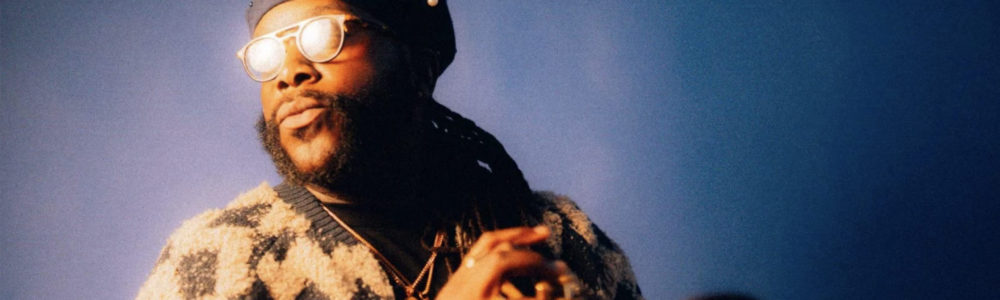
Dave Brattain — Saxophones
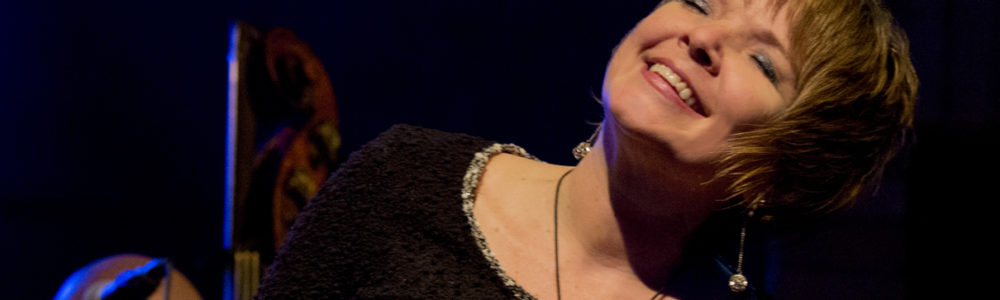
Bryan Nichols — Keyboards
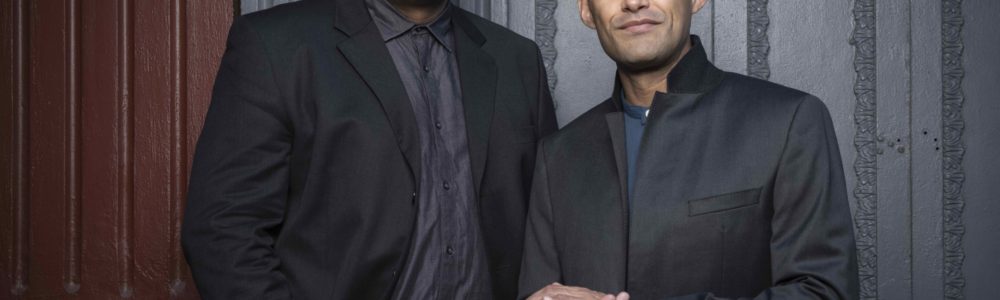
Dan Carpel — Bass
Miguel Hurtado — Drums
The personnel are important.
These are not musicians assembled to reproduce a 1970s record note for note. They are improvisers accustomed to musical conversation, spontaneous restructuring and taking compositions somewhere they have not previously been.
Several members of the ensemble have worked together in Kenny-led performances devoted to John Coltrane as well as concerts of Kenny’s original music. That shared history creates the sort of trust that allows a band to take chances.
And taking chances may ultimately be the most appropriate way to honor Chuck Mangione.
The goal is not to recreate the sound of 1978.
It is to ask what happens to these compositions in 2026 when five experienced jazz musicians encounter them with decades of additional jazz history behind them.
What happens when a familiar Mangione melody becomes the launching point for an extended saxophone or trumpet improvisation? What happens when the rhythm section alters the landscape beneath it? What possibilities emerge when Nichols reharmonizes a familiar passage, or when Carpel and Hurtado pull the music away from its expected groove?
Most importantly: what happens when listeners hear these pieces without the cultural baggage that accumulated around their popularity?
Perhaps they simply become tunes again.
And good tunes have always been among jazz musicians’ favorite raw materials.
Hearing Chuck Mangione Again
Mangione achieved something few jazz musicians ever accomplish. He developed a personal sound, wrote music recognizable within seconds, won Grammy Awards, composed ambitious large-scale works, reached enormous popular audiences and put an improvising horn player near the center of American popular culture.
There is no contradiction in acknowledging both his commercial success and his jazz substance.
Indeed, that tension is part of what makes his legacy interesting.
The time may be right to move beyond the image of the floppy hat and the opening bars of “Feels So Good” and listen again to the composer underneath them.
The Steve Kenny Quintet’s Crooners performance offers precisely that opportunity — not a museum exhibit and not a nostalgia act, but five jazz musicians testing Mangione’s music against the thing that ultimately determines whether a jazz composition survives:
Can musicians still find something new to say through it?
For Chuck Mangione’s best music, the answer seems very likely to be yes.
Performance Information
Chuck Mangione Tribute featuring the Steve Kenny Quintet
Thursday, September 10, 2026 — 6:30 PM
Crooners Main Stage Showroom
Minneapolis, Minnesota
Doors open at 5:30 PM for dinner and drink service.
Performance: 6:30–8:00 PM
Steve Kenny — Trumpet
Dave Brattain — Saxophones
Bryan Nichols — Keyboards
Dan Carpel — Bass
Miguel Hurtado — Drums
The concert will explore Chuck Mangione’s catalog as living jazz repertoire — honoring the melodies and spirit that made his music beloved while opening the compositions to contemporary improvisation, interaction and reinvention.
Ticket link for the show is : https://www.croonersmn.com/event/chuck-mangione-tribute-featuring-the-steve-kenny-quintet/